Theme Tasks catalog
Commutative property of addition
• You will learn about the commutative law of addition and learn to use it when you count;
• You will practice finding unknown parts and results of addition and subtraction;
• You will solve problems to find the sum, the difference, and to increase a number by a few units;
• You will practice comparing the values of number expressions.
• You will practice finding unknown parts and results of addition and subtraction;
• You will solve problems to find the sum, the difference, and to increase a number by a few units;
• You will practice comparing the values of number expressions.
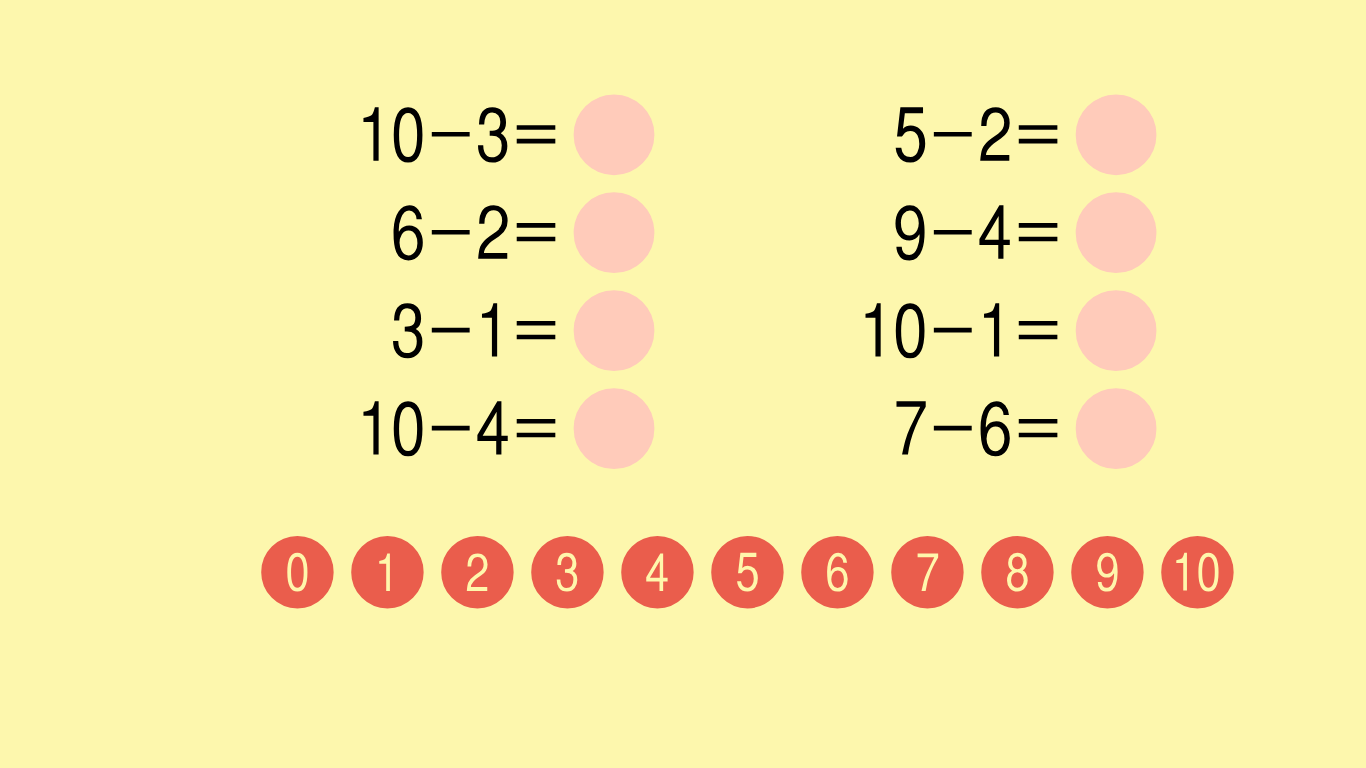
1
Count. Choose the right numbers.
Count. Choose the right numbers.
2
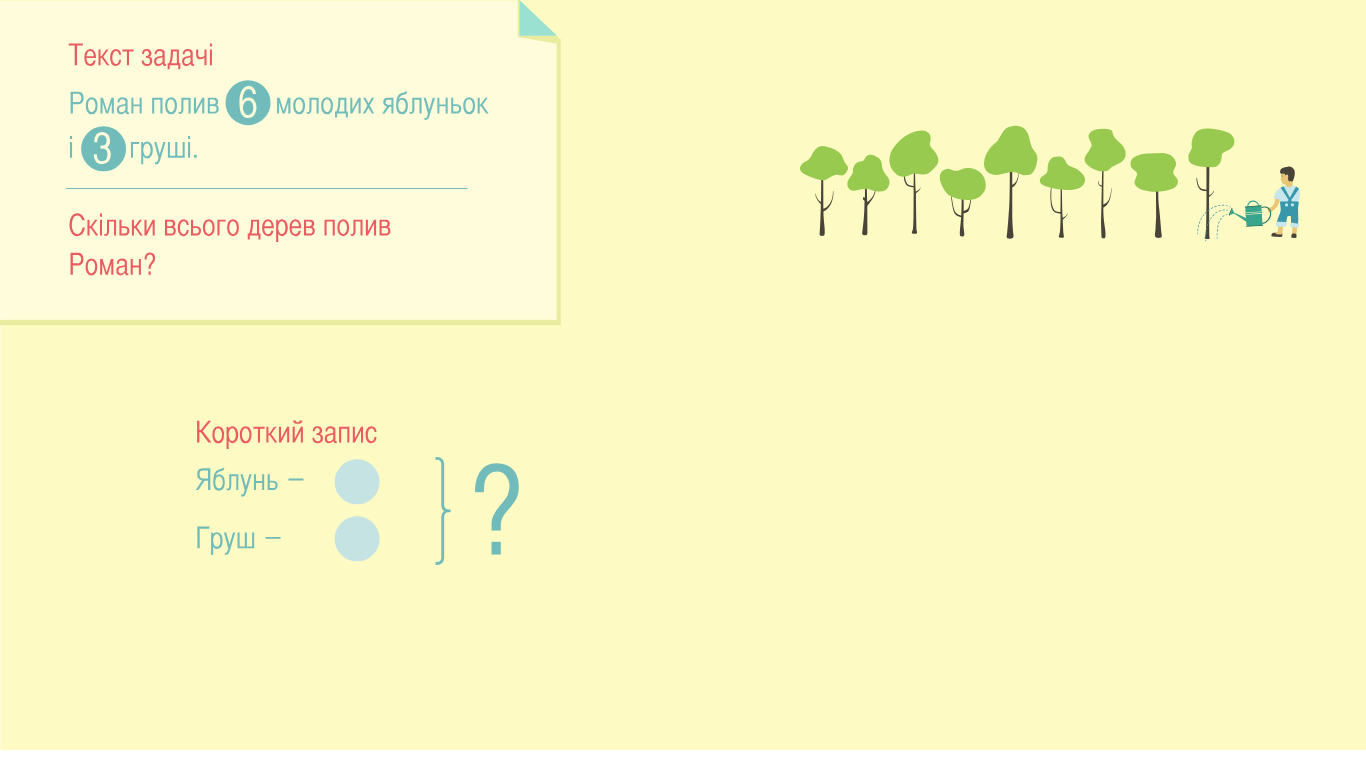
Make a short note and solve the problem.
Roman watered 6 young apple trees and 3 pear trees.
How many trees did Roman water in all?
Make a short note and solve the problem.
Roman watered 6 young apple trees and 3 pear trees.
How many trees did Roman water in all?
3
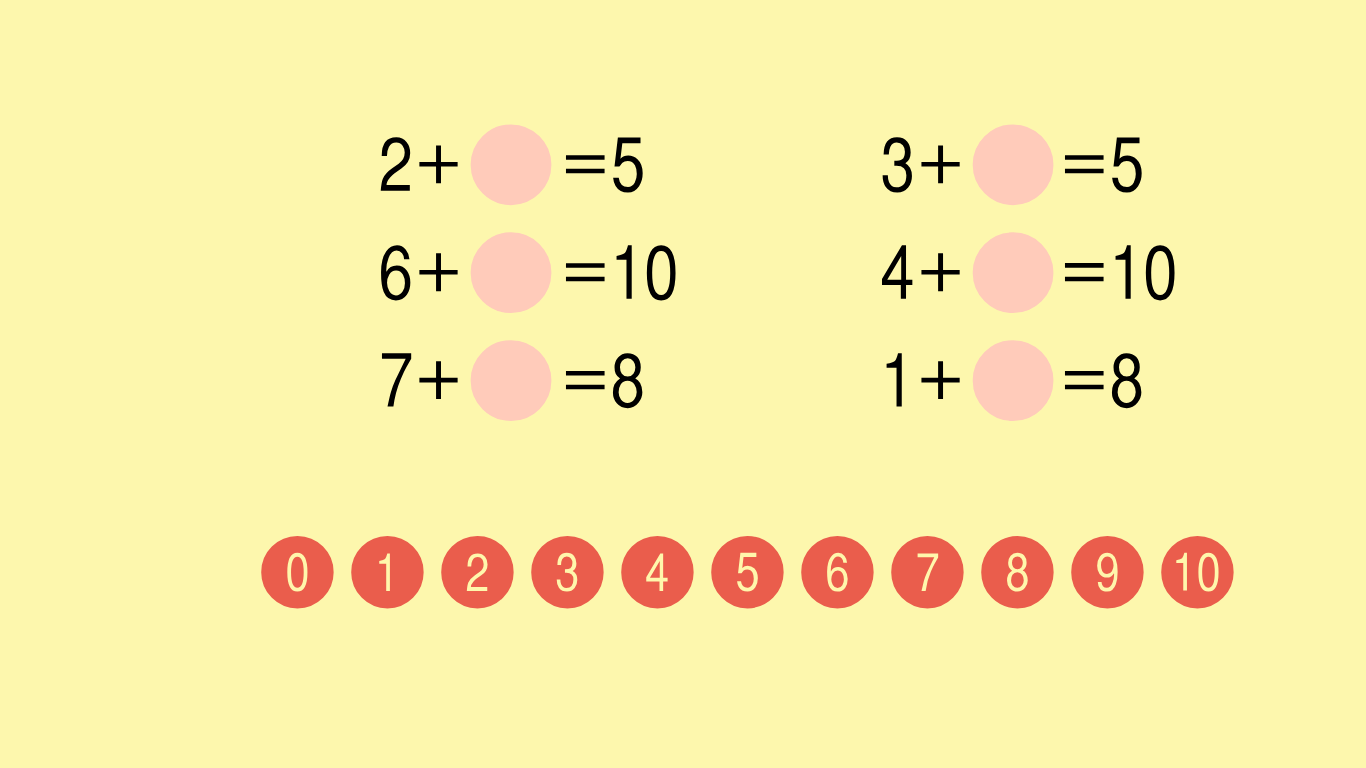
Choose the addends. Fill in the right numbers.
Choose the addends. Fill in the right numbers.
4
Read the equalities. Pay attention to the sum of each pair of equalities.
2 plus 3 equals 5.
3 plus 2 equals 5.
6 plus 3 equals 9.
3 plus 6 equals 9.
5 plus 4 equals 9.
4 plus 5 equals 9.
If you change the order of the addends, the sum does not change.
2 plus 3 equals 3 plus 2.
6 plus 3 equals 3 plus 6.
5 plus 4 equals 4 plus 5.
Let's do the task together.
Let's find the wrong expression and choose it.
Look at the screen.
If you add 4 to 3, you get 7.
If you add 3 to 4, you also get 7.
Because if you change the order of the addends, the sum does not change.
So, the expression 4 plus 3 equals 8 is wrong.
Let's choose it.
Do the next tasks by yourself.
Read the equalities. Pay attention to the sum of each pair of equalities.
2 plus 3 equals 5.
3 plus 2 equals 5.
6 plus 3 equals 9.
3 plus 6 equals 9.
5 plus 4 equals 9.
4 plus 5 equals 9.
If you change the order of the addends, the sum does not change.
2 plus 3 equals 3 plus 2.
6 plus 3 equals 3 plus 6.
5 plus 4 equals 4 plus 5.
Let's do the task together.
Let's find the wrong expression and choose it.
Look at the screen.
If you add 4 to 3, you get 7.
If you add 3 to 4, you also get 7.
Because if you change the order of the addends, the sum does not change.
So, the expression 4 plus 3 equals 8 is wrong.
Let's choose it.
Do the next tasks by yourself.

5
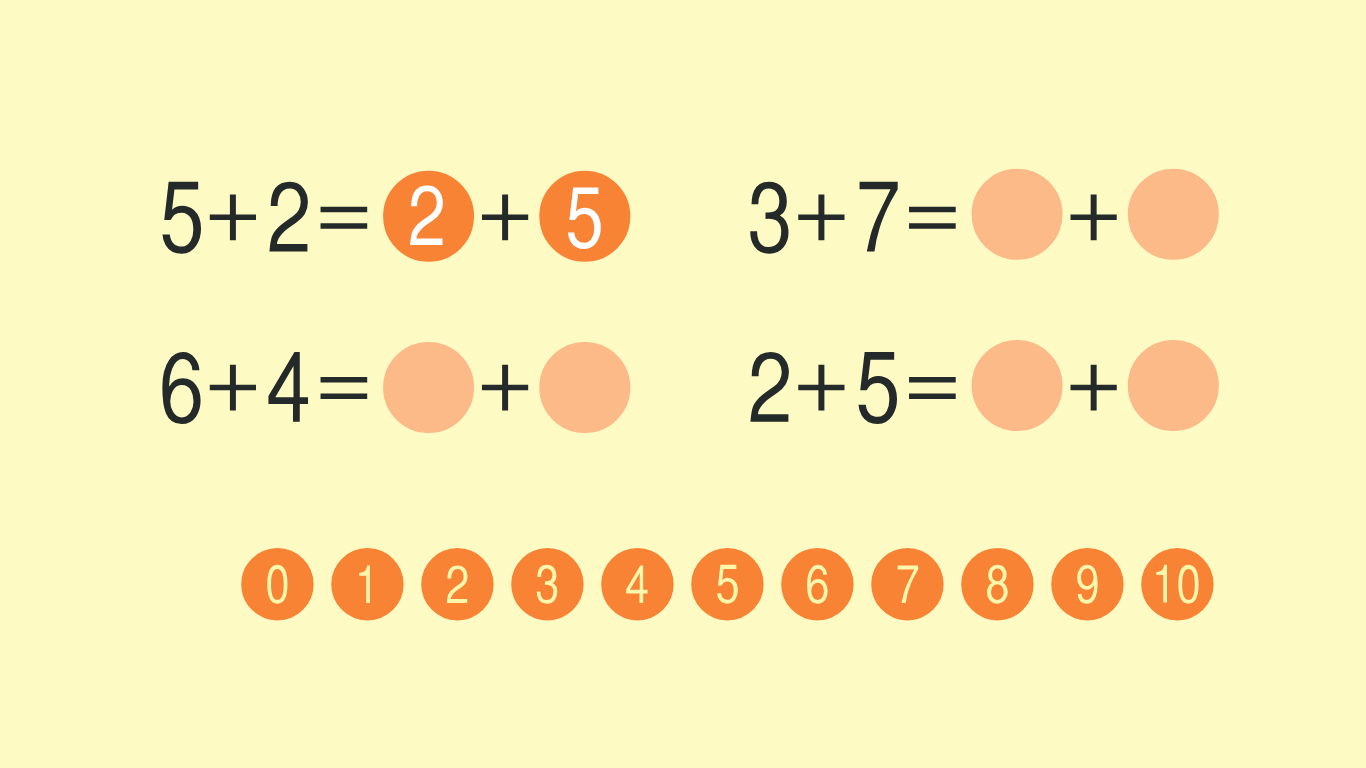
Switch the addends as in the example.
Switch the addends as in the example.
6
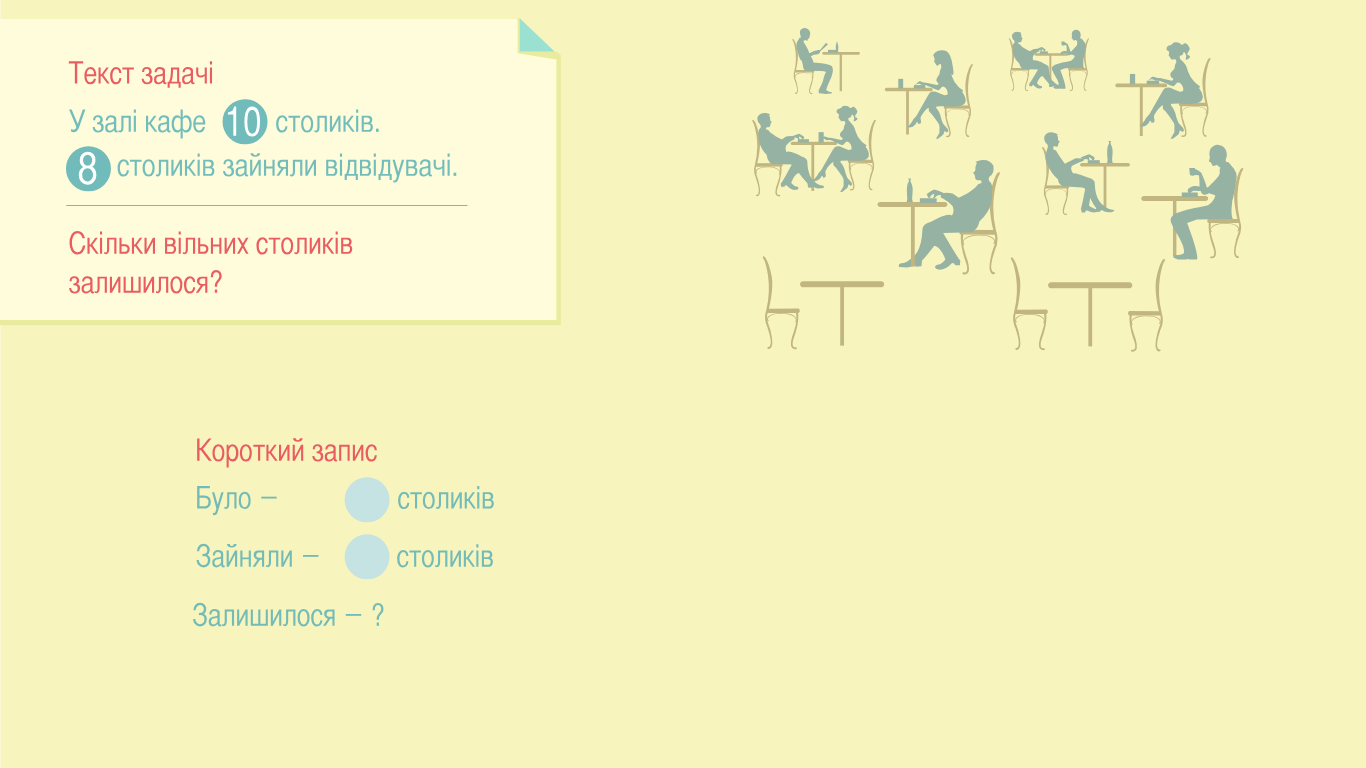
Make a short note and solve the problem.
There are 10 tables in the cafe hall.
8 tables are taken by visitors.
How many free tables are left?
Make a short note and solve the problem.
There are 10 tables in the cafe hall.
8 tables are taken by visitors.
How many free tables are left?
7
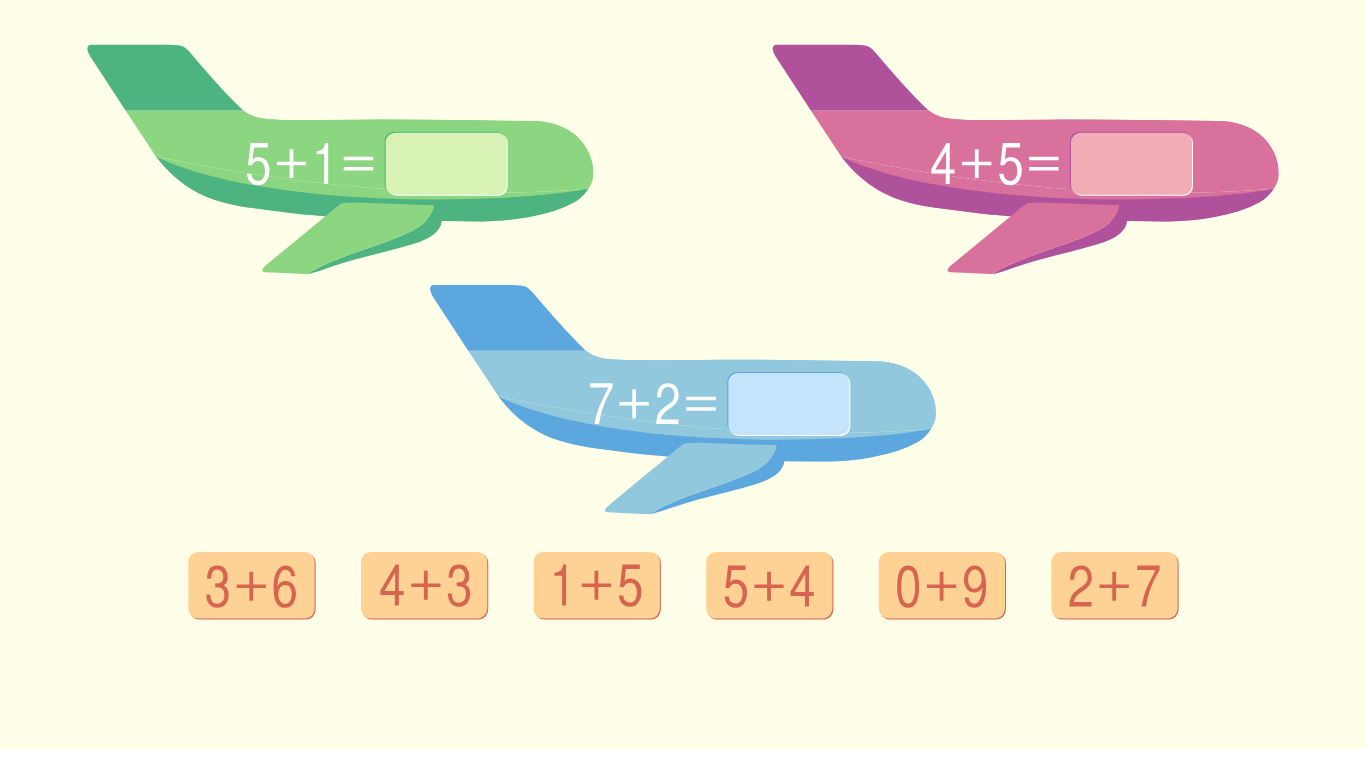
Find the expressions with the same value.
Find the expressions with the same value.
8
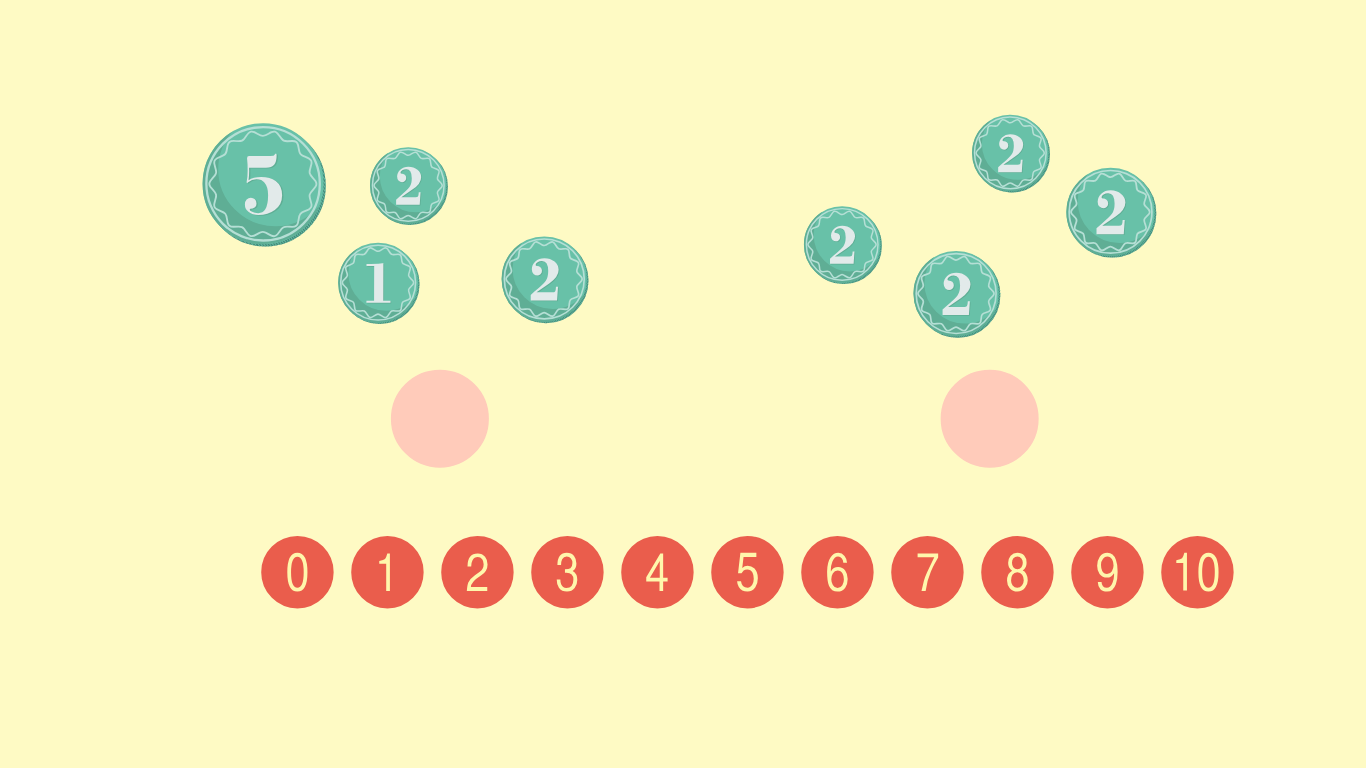
Count the coins. Choose the right numbers.
Count the coins. Choose the right numbers.
9
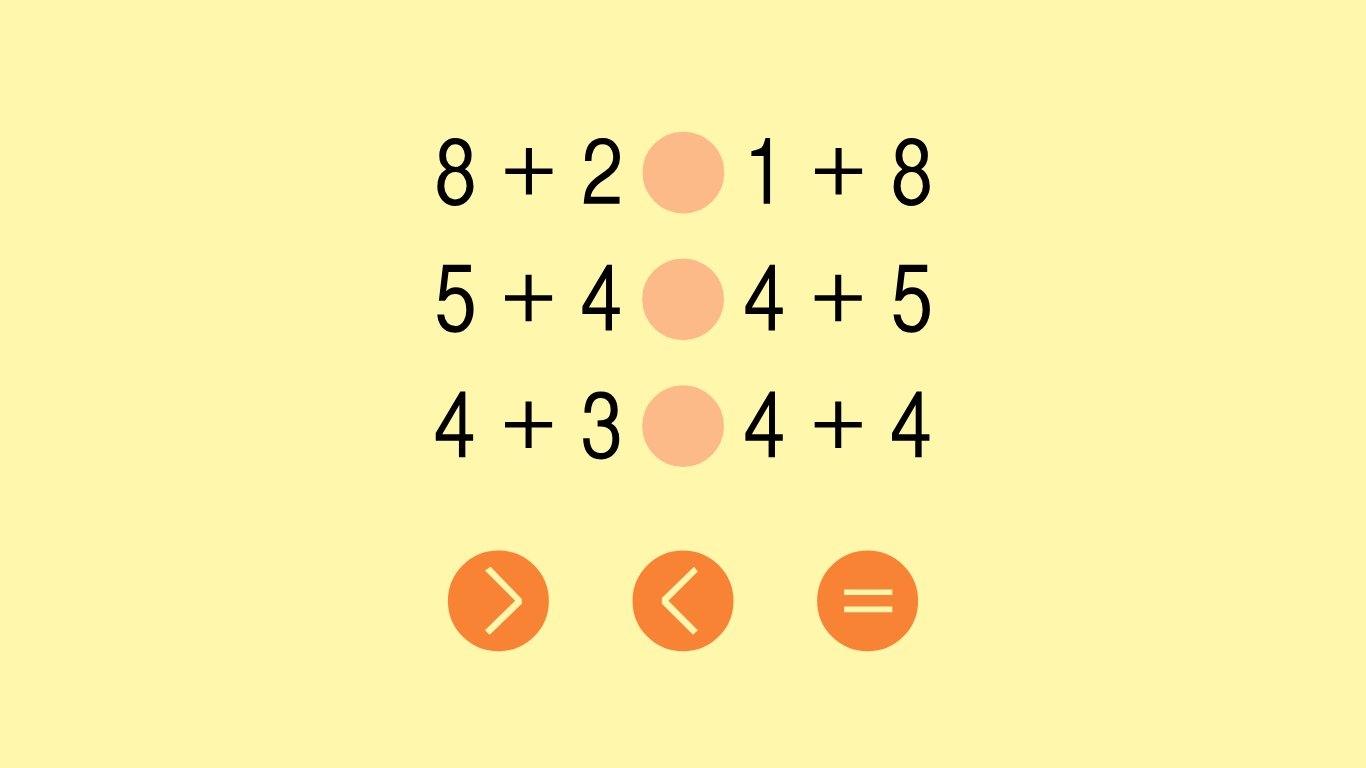
Insert the sign "greater", "less" or "equals".
Insert the sign "greater", "less" or "equals".
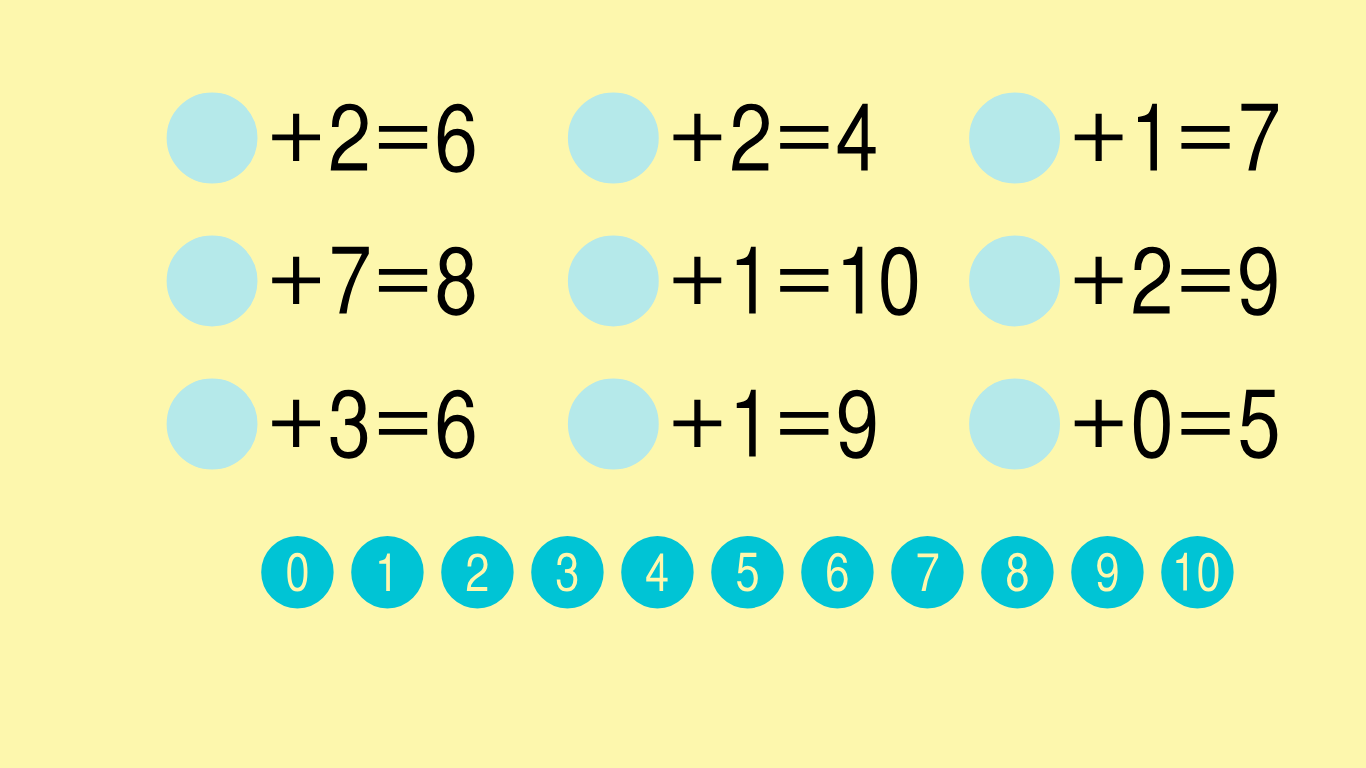
10
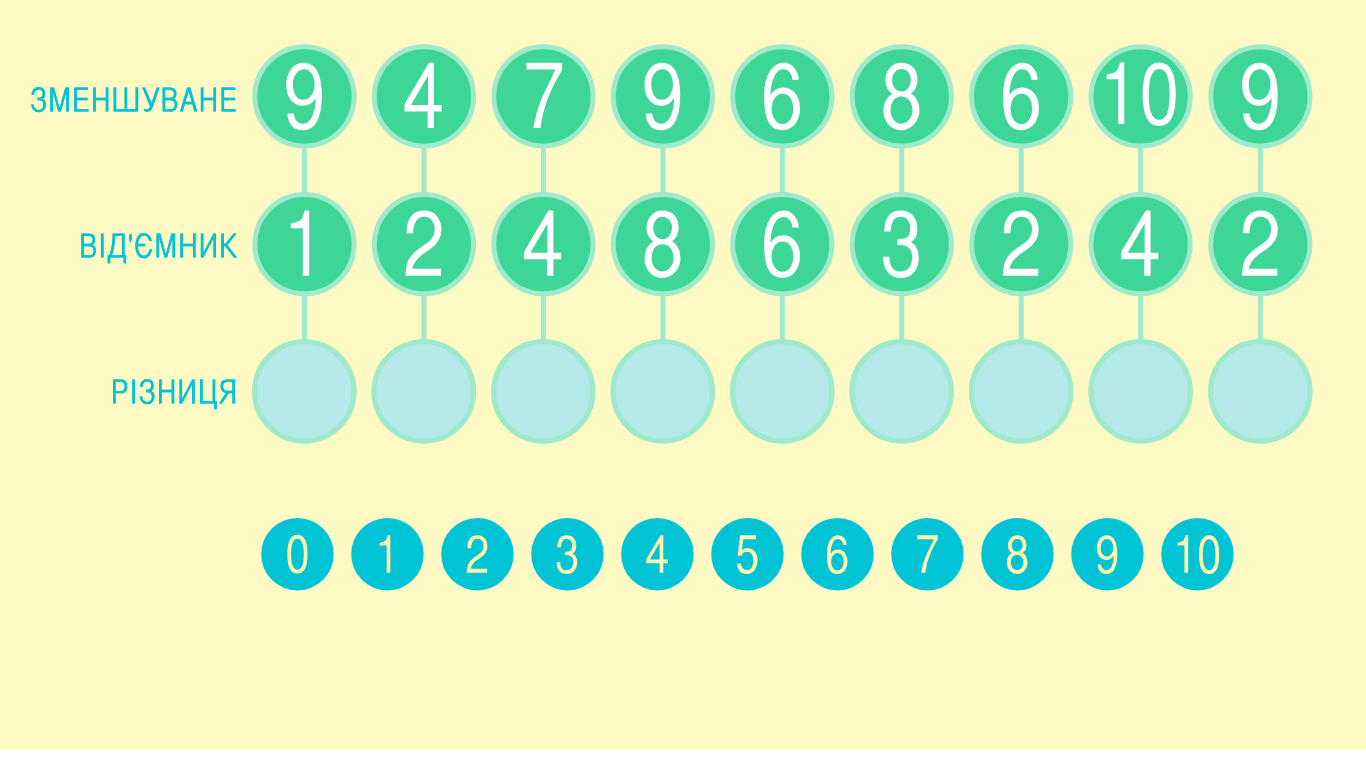
Fill in the blanks. Choose the right numbers.
Fill in the blanks. Choose the right numbers.
11
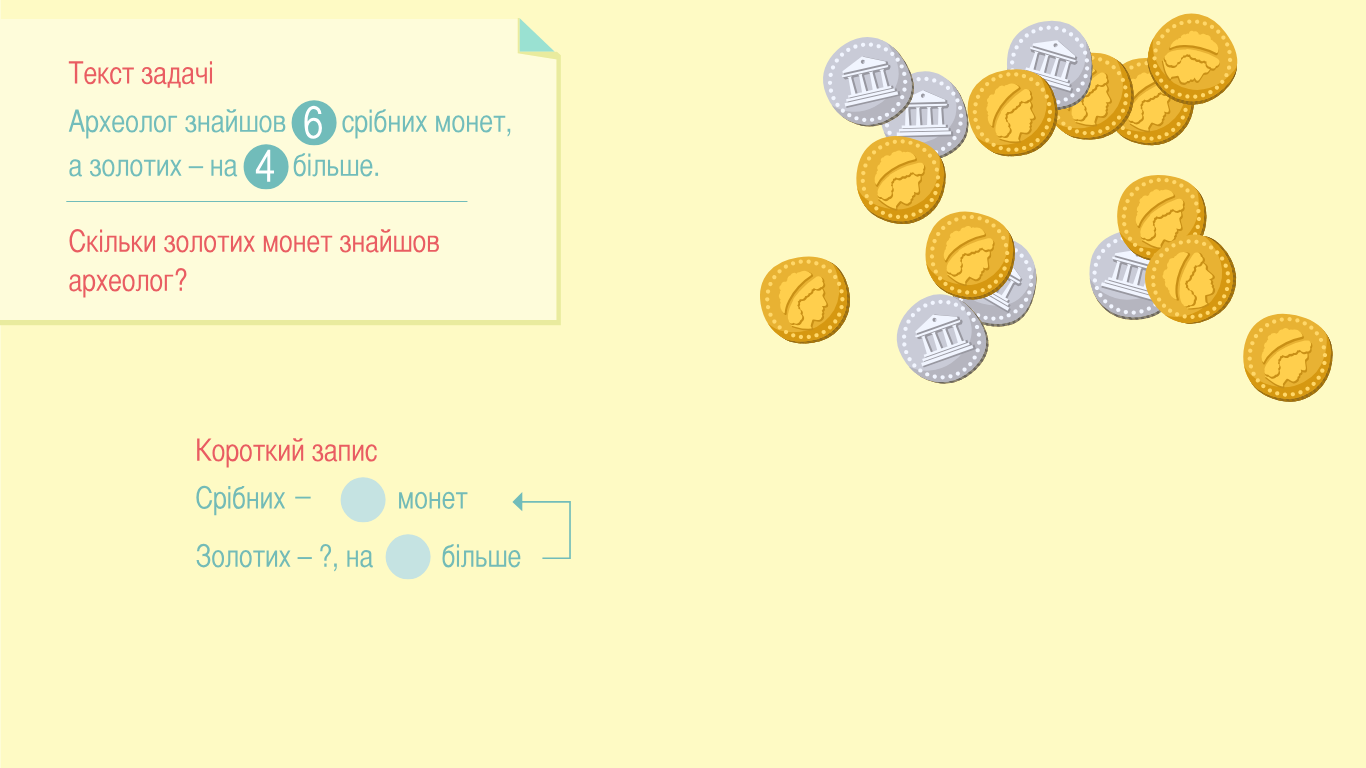
Make a short note and solve the problem.
An archaeologist found 6 silver coins, and gold ones -- 4 more.
How many gold coins did the archaeologist find?
Make a short note and solve the problem.
An archaeologist found 6 silver coins, and gold ones -- 4 more.
How many gold coins did the archaeologist find?
12
Choose the addends. Fill in the right numbers.
Choose the addends. Fill in the right numbers.